

Does the Met Gala matter?
& what didn't make my newspaper column

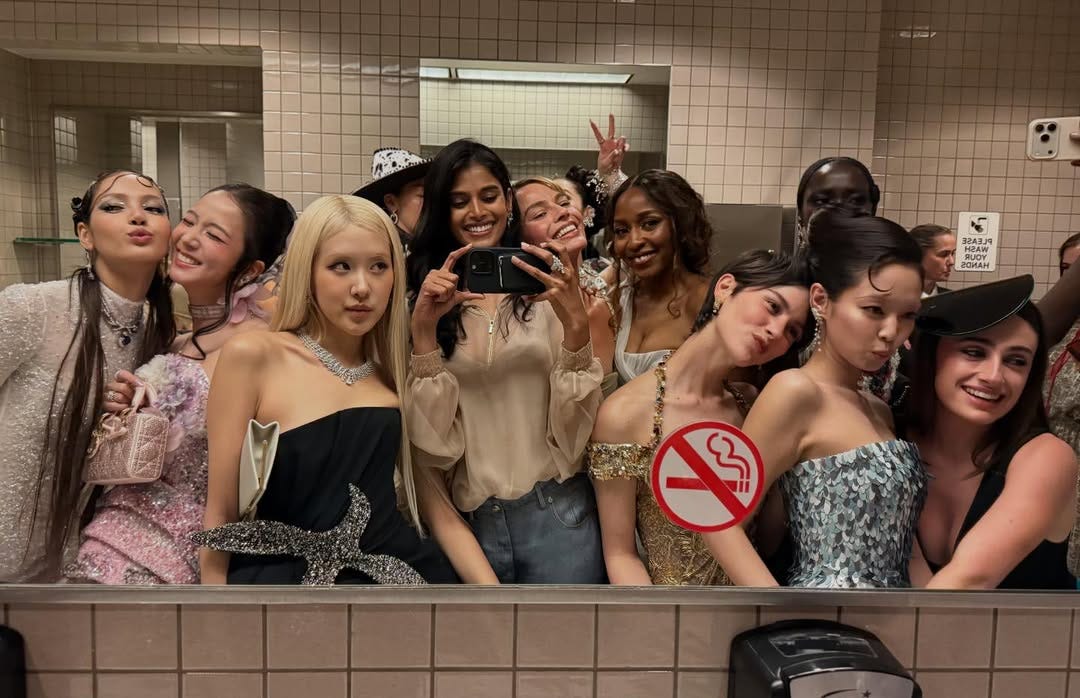
This is the long reportage version of the column I run over at The Hindu Sunday Magazine. A brilliant newspaper, might I add — where I get to dissect India’s footprint on the world’s cultural stage.
There is a particular kind of cognitive dissonance that only the first Monday in May can provide. On one side of Fifth Avenue, the world’s most famous people ascend the Met steps dressed as living sculptures and hand-painted canvases. And on the other side, beyond the barricades and the flashbulbs, protesters ask who gets to fund culture, who gets to narrate it, and who pays the price when art becomes a billionaire’s calling card.
Timed with the Met Gala, the theme of the Costume Institute’s new exhibition is Costume Art, while the dress code for the gala was ‘Fashion is Art’. The Costume Institute’s annual spring exhibition, this year, moved into the new Condé M. Nast Galleries, a nearly 12,000-square-foot space adjacent to the Met’s Great Hall, named after the founder of Condé Nast. For decades, fashion lived in the basement. Now it sits on the ground floor, in the museum’s public consciousness and, quite literally, in the path of everyone entering the building.
The exhibition itself is built around the dressed body, pairing nearly 400 objects from the Met’s collection, including garments, accessories and artworks, to examine how fashion and art have shaped one another. It traverses the museum’s 5,000-year-old collection and organises itself around different kinds of bodies, from the naked and classical to the ageing, disabled, abstracted and mortal. The mannequin is no longer the blank, slender, anonymous stand-in fashion has historically preferred. Some mannequins even have mirrored faces, returning the viewer to themselves. It is a clever curatorial move, not least because it asks the person looking to consider where they sit in the frame.
And yet, even as the exhibition made a scholarly case for fashion’s place in art history, the gala around it was being shaped by another kind of frame. This year’s exhibition and Benefit were made possible by Jeff Bezos and Lauren Sánchez Bezos, with additional support from Saint Laurent and Condé Nast. The Bezos presence produced its own counter-programming. Activists staged a ‘Labor is Art’ fashion show in Manhattan, bringing together Amazon workers, unions and supporters. Others papered the city with messages objecting to the gala’s billionaire patronage.
The old defence is that at least billionaires are funding the arts. It is not an entirely useless defence. Public museums need money. Fashion exhibitions cost money. Conservation, research, acquisitions and free public access do not run on vibes. Most major cultural institutions have long relied on the generosity, ego, taste and tax arrangements of the very rich.


The Met Gala is no longer a private dinner photographed for posterity. It is a content empire. Vogue’s livestream was broadcast across its digital platforms, including YouTube and TikTok, and the red-carpet replay was presented by brands including Colgate, eBay, Eli Lilly and Company, and On. The party raises funds for the Costume Institute, yes, but it also drives a week-long global economy of livestreams, affiliate links, beauty breakdowns, brand placements, reaction videos and red-carpet punditry. In internet time, one Met Gala night lasts for months, if not, years.
Perhaps that is why New York City mayor Zohran Mamdani and his wife, artist Rama Duwaji, chose not to attend. Their absence was meaningful not because mayors have always attended the gala, they have not, but because this year’s context made staying away a statement. Mamdani, whose mother is filmmaker Mira Nair and whose wife is an illustrator, is hardly allergic to the arts. Instead, he released a fashion portfolio honouring the garment, retail and warehouse workers who keep the industry running, including tailors and former Amazon employees. It was not a rejection of fashion. It was a reorientation of the spotlight.
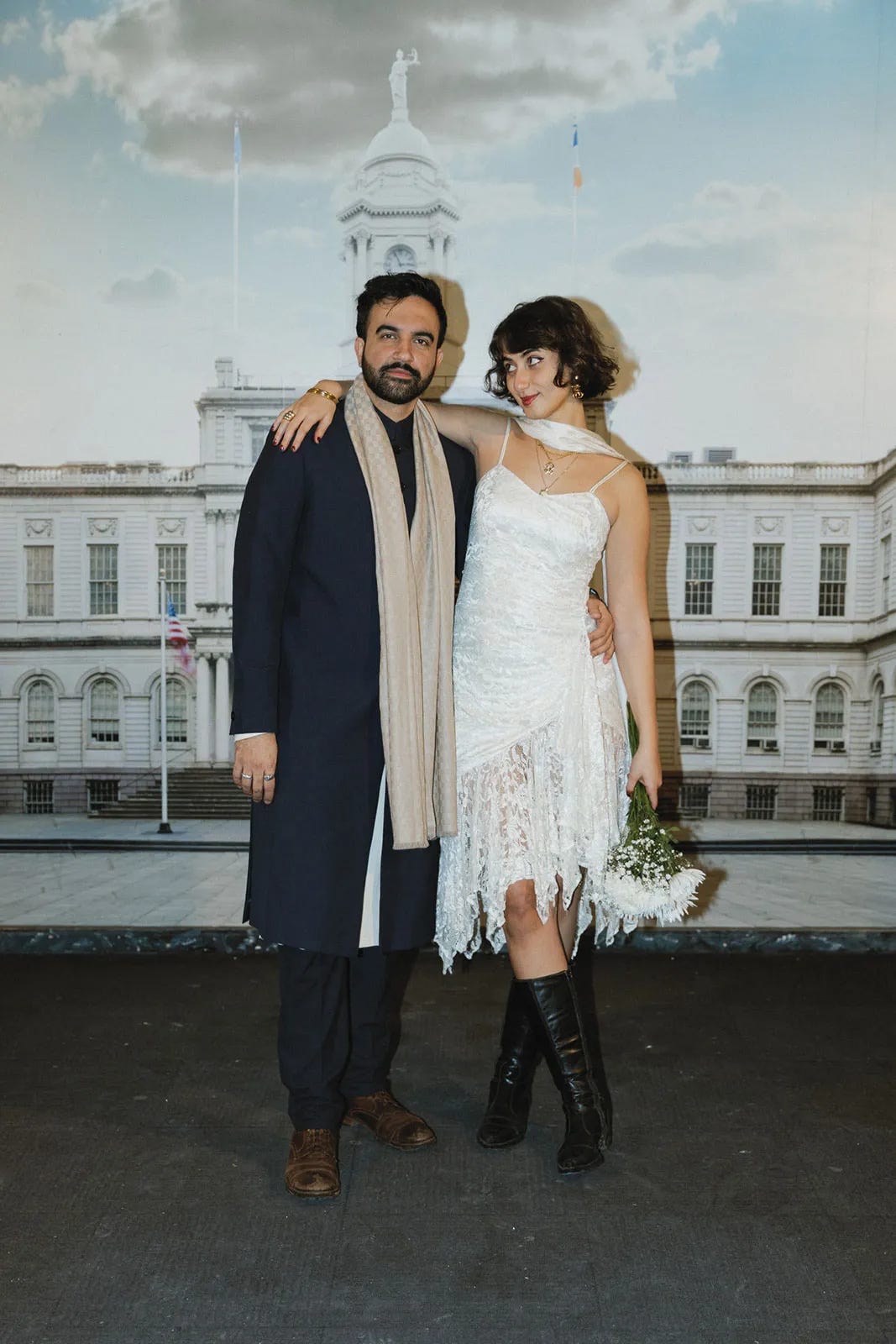
For India, however, the night told another story. If last year’s Met Gala made Indian representation feel newly visible, this year made it feel expansive. Alia Bhatt and Sabyasachi were absent, but red-carpet veterans Isha Ambani and Natasha Poonawalla returned, as did Sudha Reddy for her third appearance. Manish Malhotra went in for his second, while Karan Johar, Gauravi Kumari and Sawai Padmanabh Singh made their debuts. Diya Mehta Jatia, who has attended before, was also present alongside Isha Ambani. It was not one story of India, but many: cinema, craft, contemporary art, royal archives, philanthropy, couture, jewellery, business and theatre.
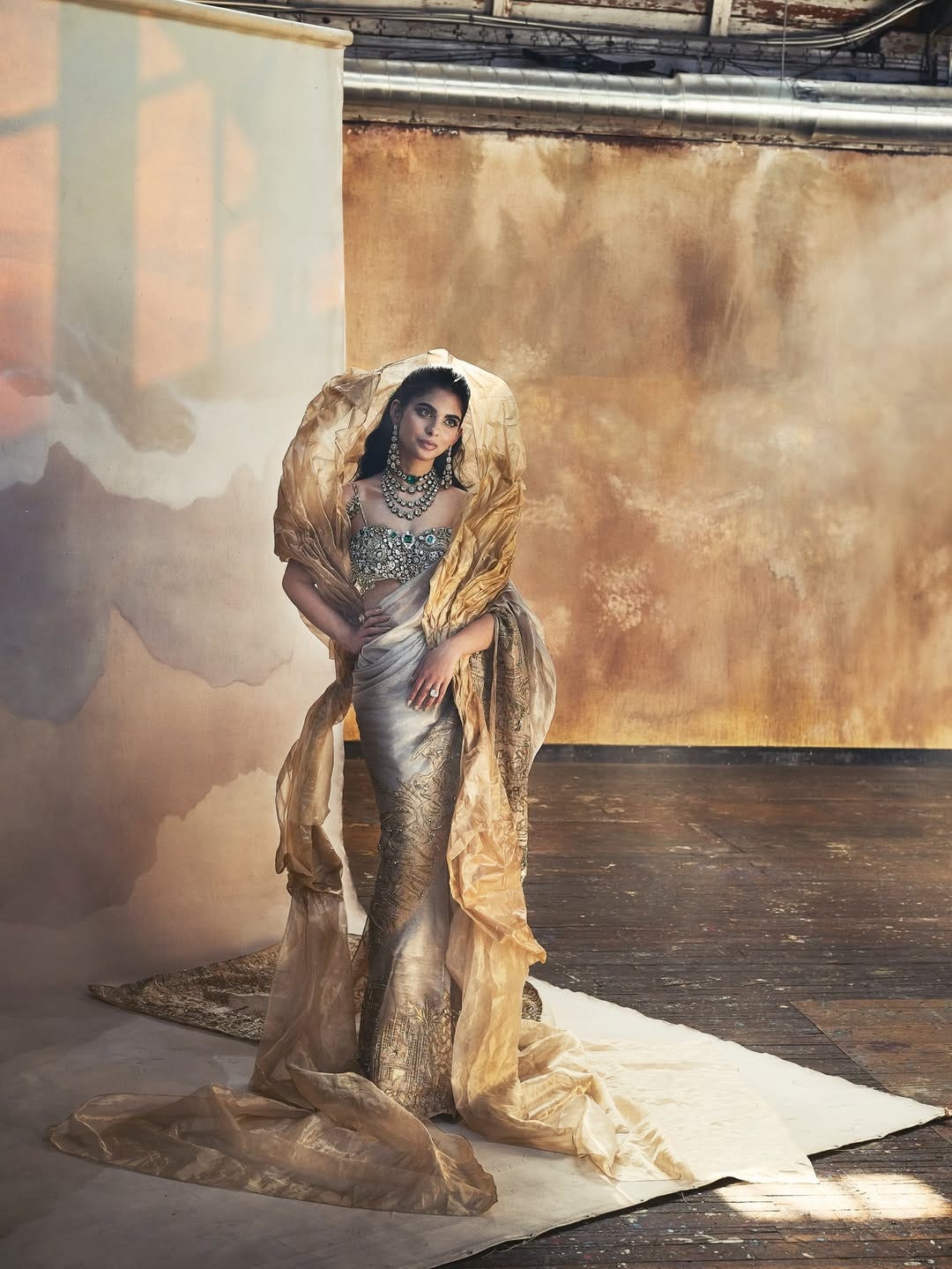
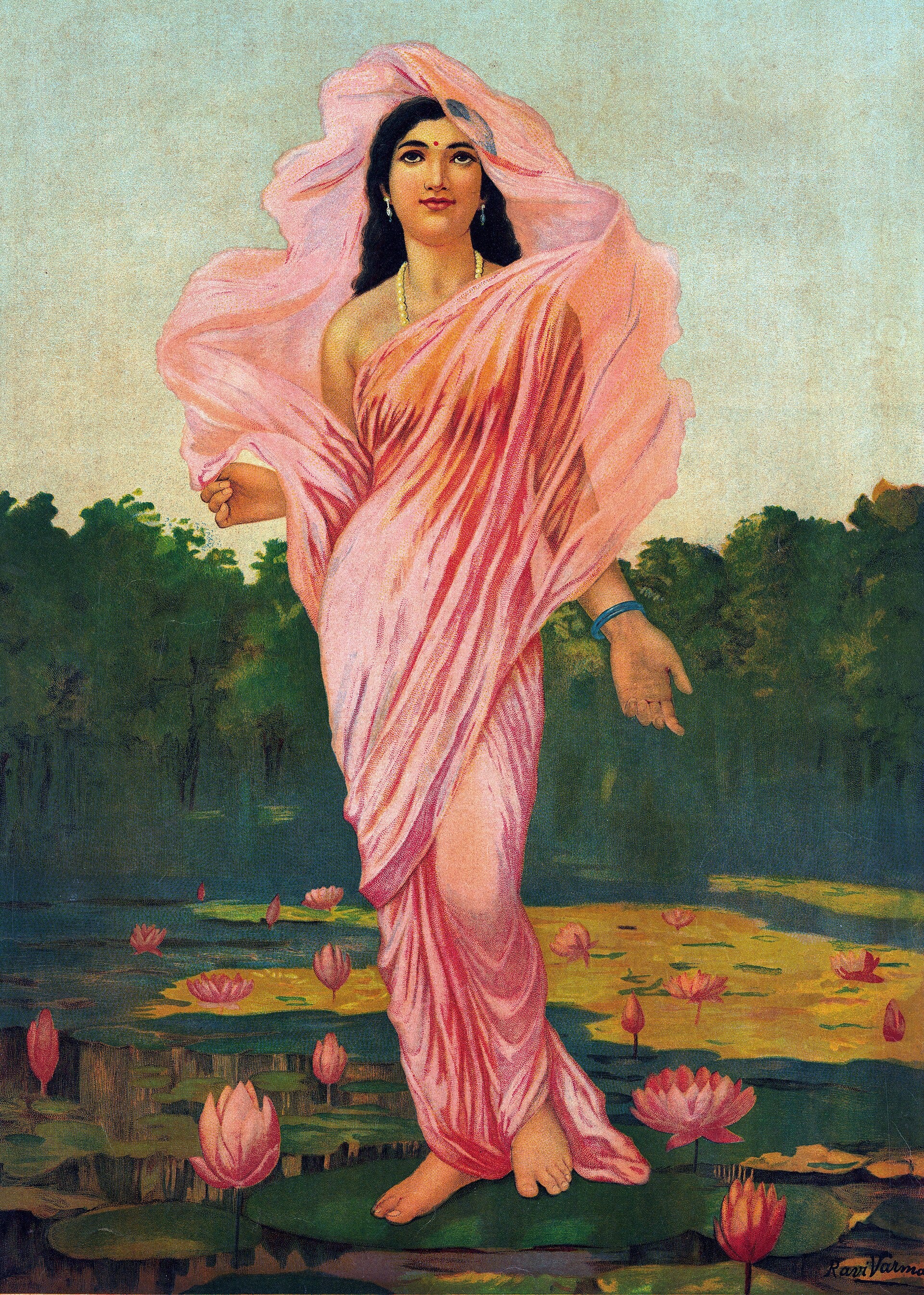
The strongest looks understood that the theme was not an instruction to dress as a painting, but an invitation to think like one. Isha Ambani’s custom Gaurav Gupta sari drew from Raja Ravi Varma’s Padmini: The Lotus Lady, and was made in collaboration with Swadesh. It came with a veil by Gaurav Gupta, a blouse encrusted with real diamonds, and a draped flower sculpture by Brooklyn-based Indian artist Sourbh Gupta. In her hand was one of the evening’s most quietly brilliant accessories: a steel mango bag by Subodh Gupta, the Indian contemporary artist whose practice has long elevated the everyday objects of Indian domestic life into monumental sculpture.
Gupta’s work often incorporates stainless-steel tiffin boxes, thali pans, bicycles, milk pails and kitchen vessels, turning the ordinary into a meditation on migration, aspiration and the economic transformation of India. His works have been shown and collected internationally, including by institutions and galleries such as Tate, Hauser & Wirth and the Smithsonian’s National Museum of Asian Art. At the Met, his language took on a new scale: intimate, handheld, wearable.
It also appeared on Ananya Birla, whose Met Gala debut paired a Robert Wun couture look with a stainless-steel and acrylic sculpture-as-mask by Gupta, made with traditional Indian silverware. “The starting point for us was this idea of how something every day can be reimagined into something extraordinary,” Birla says. “That’s a common thread that runs through both Robert Wun’s couture and Subodh Gupta’s sculptural mask. Both take the familiar and give it a nouveau presence. This juxtaposition spoke to me, as I find myself at the cusp of business and music each day,” she tells The Hindu.
For Gupta, the translation from sculpture to mask was an interesting new dimension. “For me, whether I make a mask or any other work, it is still a piece of art. The form may change, but the thinking remains the same.” He adds, “When someone wears the work or carries it, it becomes like a performance, they become part of the artwork. I like that exchange. And Robert Wun approached Birla’s look with a similar interest in the body and its architecture. “This is the first time our work is also a part of the exhibit. As a brand there has always been a connection in what we do with the body and the human form, and that naturally became part of how we approached Ananya’s look.
Gauravi Kumari and Sawai Padmanabh Singh brought another register of Indian storytelling. Designed by Prabal Gurung, her look incorporated her grandmother Maharani Gayatri Devi’s chiffon sari, reworked into a pink sari-gown with pearls in homage to the late royal’s unmistakable style. His centred on the Phulghar coat, a regional form developed with Gurung and realised in Jaipur by Yash and Ashima Tholia and their team, constructed in deep velvet and completed over more than 600 hours with aari, zardozi, dabka and resham.
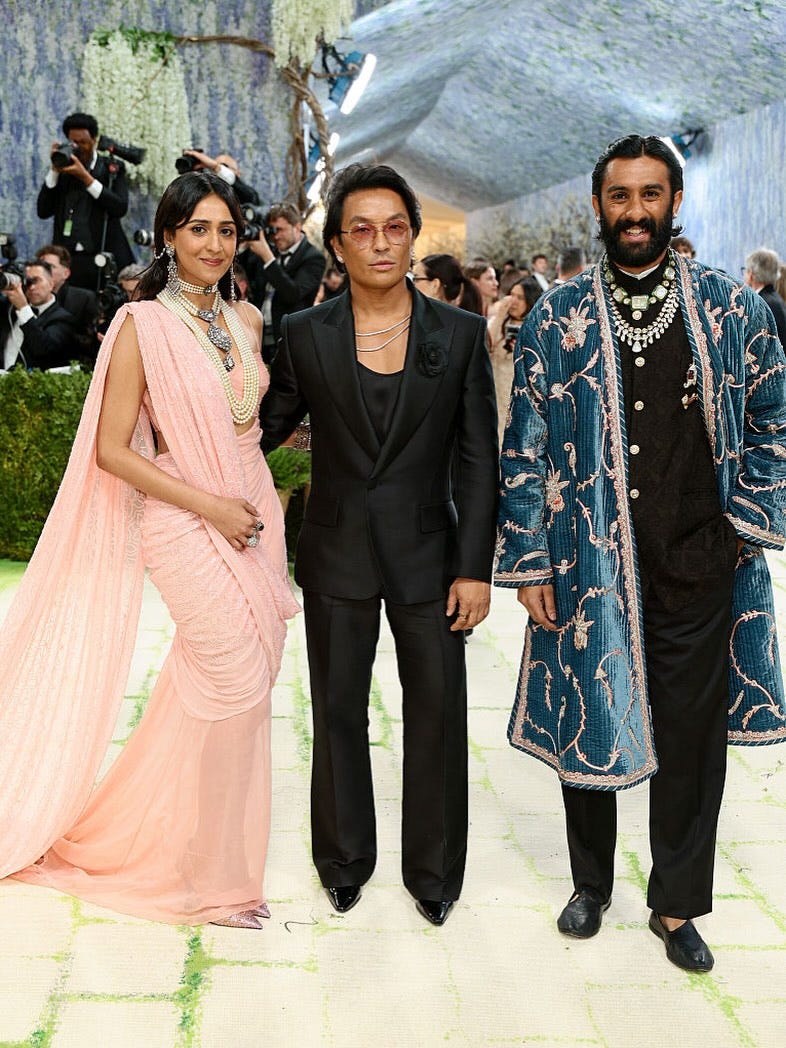
For Kumari, the point was continuity rather than nostalgia. “For me, it was important that it felt personal, considered and deeply rooted in my heritage.” Her observation on India’s growing presence at the Met is perhaps the clearest articulation of what has changed: “It’s been very meaningful to see India’s presence grow at the Met Gala each year. It reflects a broader recognition of the depth and diversity of Indian fashion, craft, and creativity on a global stage. What’s particularly interesting is how each representation brings a different perspective - there isn’t just one narrative. It feels like a moment of greater visibility, but also of nuance.”
That nuance mattered because the Met carpet has not always known what to do with Indian fame. Last year, when Shah Rukh Khan stepped onto Vogue’s carpet, there was a collective wince from those who knew the scale of what had just happened. The hosts seemed under-briefed, as though one of the most beloved movie stars on earth had arrived without a fact sheet. Sabyasachi Mukherjee had to supply the context. No shade, really. Without preparation, anyone can stumble. But the moment underlined the gap between global fashion’s appetite for representation and its ability to recognise the people it is representing.

This year felt different. Names were pronounced with care. Context was offered. The coverage appeared better aligned across local and global Vogues. The red carpet seemed to understand that Gauravi Kumari and Sawai Padmanabh Singh were not just well-dressed young royals, but carriers of a precise cultural story.
Daniel Rodgers, Fashion News Editor at British Vogue, describes the best Met Gala looks as those that “can ignite the internet and withstand a more rigorous reading the next morning.” On this year’s theme, he says, “It means looking at fashion through an art-historical lens. On one level, it’s about the long-standing relationship between designers and artists: Yves Saint Laurent’s Mondrian dresses, Versace’s Warhol prints. But it can also extend to garments that operate as objects in their own right – pieces that complicate our understanding of beauty, luxury, wearability… Importantly, this is not a conversation confined to one geography.”
That last line is the invitation. The more specific a story is, the more universal it often feels. Diljit Dosanjh understood that last year, in his feathered turban, Golecha necklace, gilded Prabal Gurung sherwani and tehmat. Karan Johar understood it this year. His Met Gala debut in Manish Malhotra, styled by Eka Lakhani, looked to Raja Ravi Varma’s visual language: the romanticism, the drapery, the theatricality of an artist who shaped how India came to see itself.
“The mood board for Karan’s look between Karan, Manish and me was very clear,” says Lakhani. “We wanted it to be about Indian art, Indian culture and our rich heritage. It was Karan’s idea that we draw inspiration from Raja Ravi Verma’s visual language, his romanticism, the rich drapery and just how beautiful his storytelling is in terms of his paintings, with his paintings.” For her, the task was not merely decorative. “We wanted to make sure that the outfit is unmistakably Indian but it doesn’t become costumey.”


She also makes clear how elaborate the machinery behind such a moment is. “Eventually you’re working with your hair stylist, your makeup artist, the photographers, the set designers because a visual narrative is very important from an overall point of view and not just a costume point of view or an outfit point of view.” The Met Gala, in other words, is not just a look. It is a pitch deck, a research paper, a production still, a diplomatic mission and a meme waiting to happen.
Anaita Shroff Adajania has seen the event change from rarefied fundraiser to global content machine. “For years, I’ve had the privilege of styling attendees for the Met Gala,long before it became the cultural phenomenon it is in India today. Back then, the guest list was a more understated reflection of global patrons of the arts, individuals for whom fashion, culture, and philanthropy intersected with quiet sophistication. Being part of that world felt rarefied, almost sacred.”
This is the paradox of the Met Gala. At its best, it offers a stage on which cultures can speak with real specificity. It allows artists, designers, stylists and patrons to make visible the intelligence of craft. It can turn a sari, a tiffin box, a mango, a Phulghar coat, a Ravi Varma reference or a pearl necklace into a global conversation. At its worst, it is a gilded room in which power congratulates itself for buying proximity to taste.
I am not sure where I stand on the question of whose money should fund our dreams. The easy answer is that money is money, and museums need it. The harder answer is that money is never only money. It changes the guest list, agendas, and reframes the story. In The Devil Wears Prada 2, the tech billionaires circling Runway magazine could have felt like satire, but after the Met Gala livestream, it reads more like a business plan.
Still, I watched Gauravi Kumari and Sawai Padmanabh Singh speak about Jaipur, craft and inheritance to a global audience, and I felt the old thrill that fashion can still produce.
The Met Gala remains fashion’s grandest red carpet. This year, it was also something more revealing: a stage for cultures, a fundraising engine, a media property, a museum argument, a billionaire’s playground and, despite itself, a mirror. What we saw in it depended entirely on where we were standing.
Read my column article here: https://www.thehindu.com/life-and-style/fashion/met-gala-2026-india-isha-ambani-karan-johar-ananya-birla-steel-mask-mango/article70944254.ece
I loved this, especially this line: “In The Devil Wears Prada 2, the tech billionaires circling Runway magazine could have felt like satire, but after the Met Gala livestream, it reads more like a business plan.” Let me say that it is more “the survival plan”
great points raised for the tech gala 💸